How Run-Flat Tires Keep You Moving in a Crisis
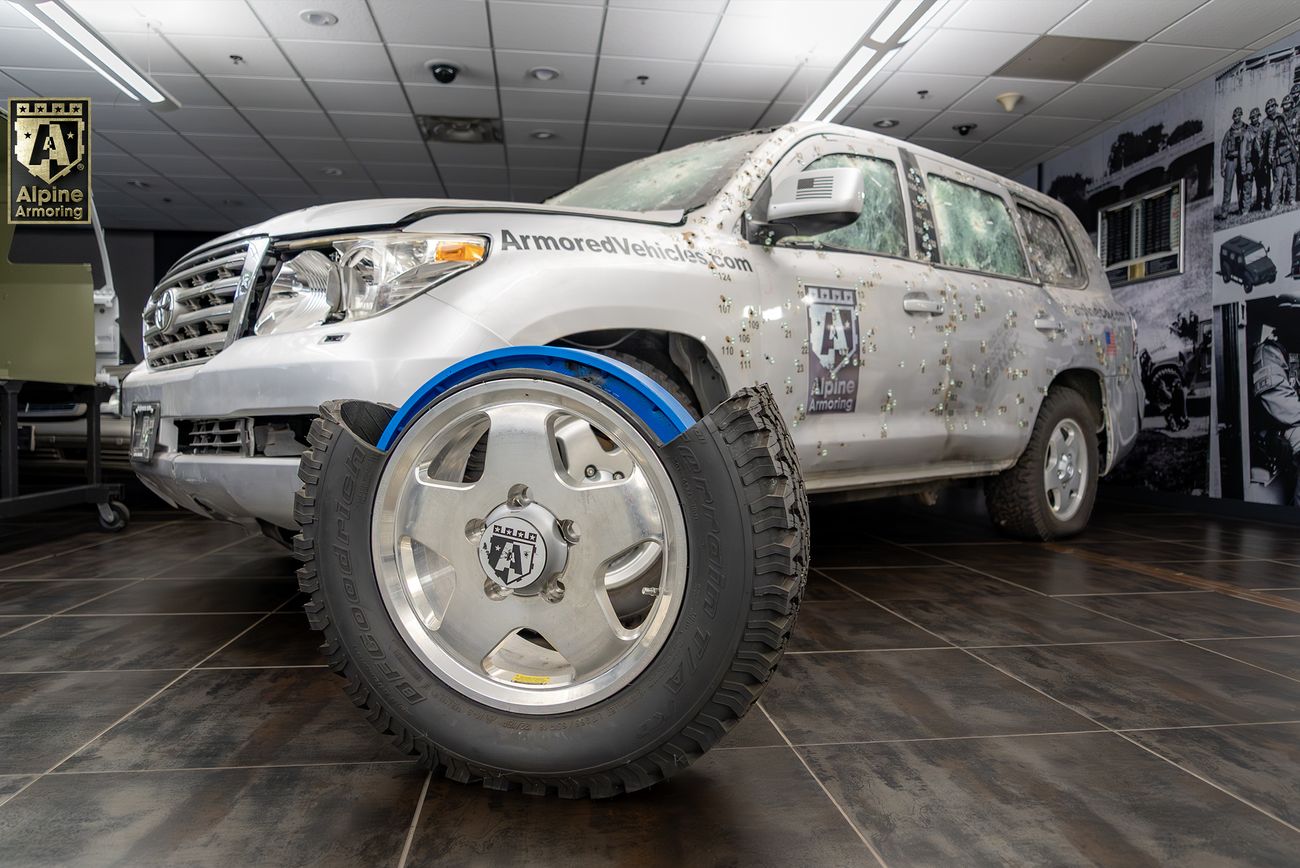
What happens when a tire puncture turns into a life-threatening situation? In high-risk scenarios where stopping isn't an option – whether escaping danger, or facing emergencies – run-flat inserts become the difference between reaching safety and being stranded in a crisis. According to Alpine Armoring's engineering team, this extended-mobility technology has become so critical that we integrate run-flat inserts as standard on all our armored vehicles, including SUVs and sedans, giving clients the essential ability to escape danger in any crisis.
What is the Difference Between Run-Flat Tires and Run-Flat Inserts?
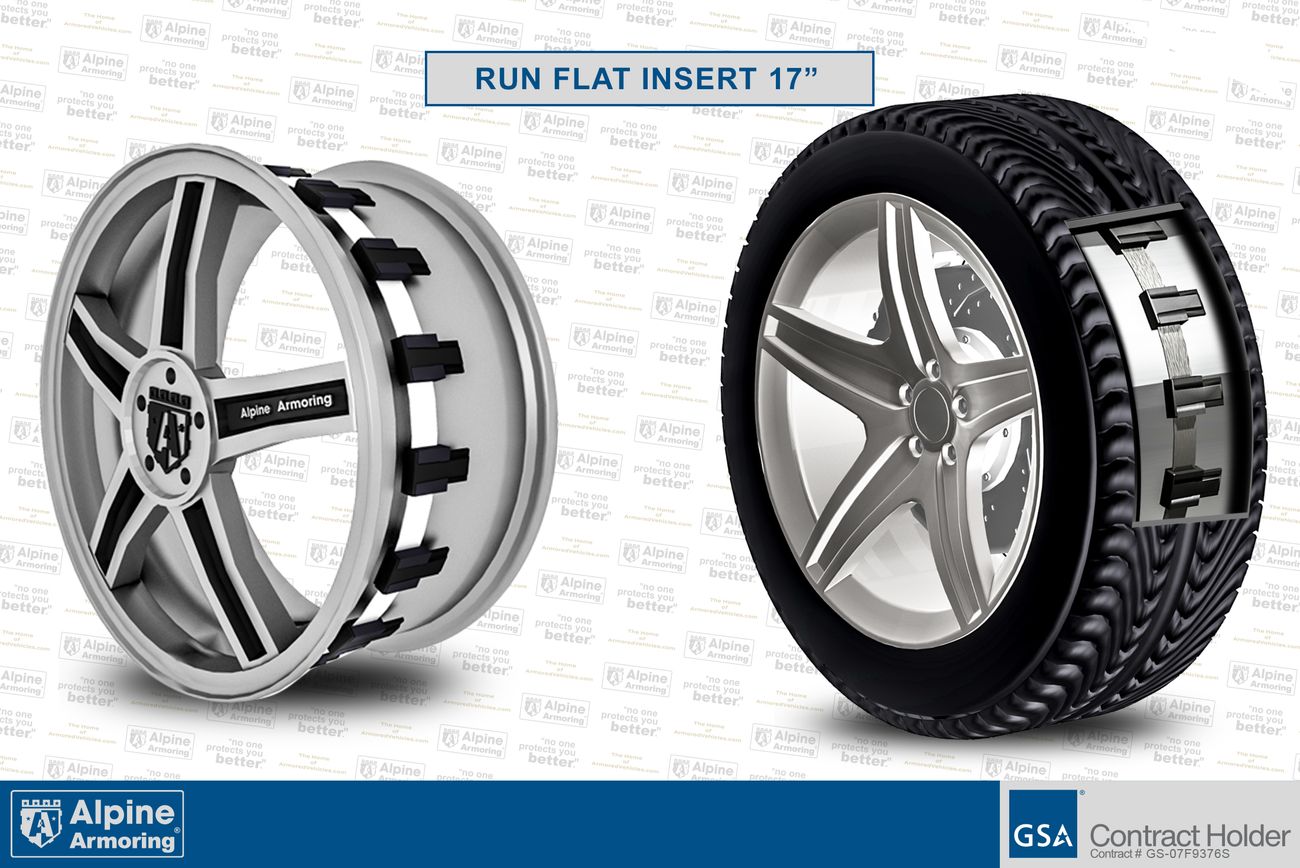
Run-flat tires and inserts serve the same purpose but use different approaches. Run-flat tires feature thicker, reinforced sidewalls (approximately ¾" versus ⅛" on standard tires). Run-flat inserts, on the other hand, are solid devices made from strong rubber and/or composite polymer compounds, installed on vehicle rims. This unique design allows these HD inserts to work within existing compatible OEM tires, maintaining the vehicle’s factory appearance while adding crucial run-flat crisis capabilities. Unlike run-flat tires that require complete tire replacement with specialized products, inserts enable extended mobility without changing the tire itself – making them a more versatile solution for armored vehicles that need to maintain a low profile.
How Run-Flat Inserts Work in Crisis Situations?
Both OEM tires and inserts deliver crisis performance capabilities through different engineering approaches.
Reinforced Sidewalls
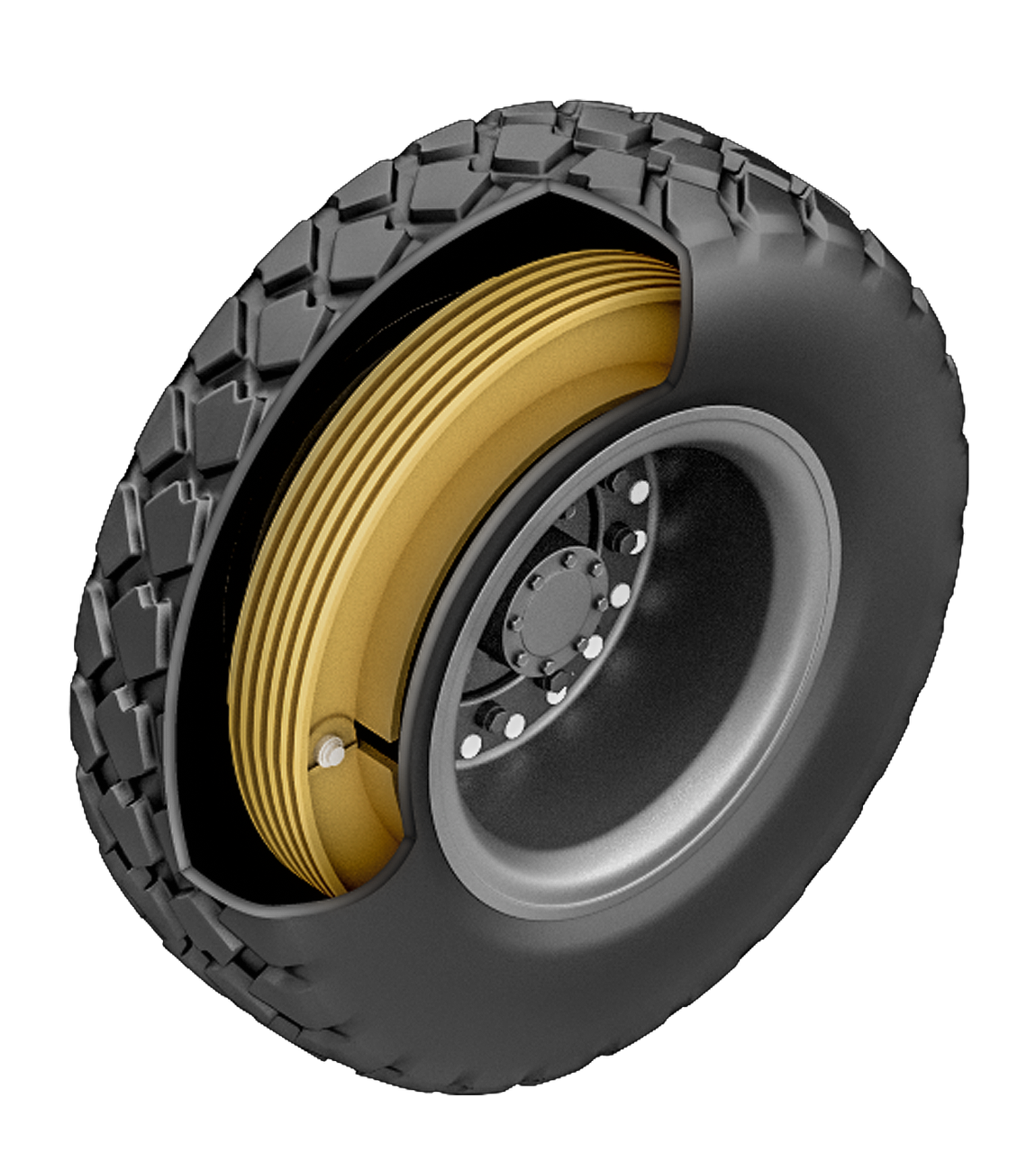
Factory support ring tires feature reinforced sidewalls, steel belts, and polyurethane support rings that prevent tire collapse in the event of air pressure loss. This construction maintains structural integrity in the event of sidewall damage from debris or other life-threatening conditions, while supporting the vehicle's full weight during driving.
Run-Flat Insert Technology
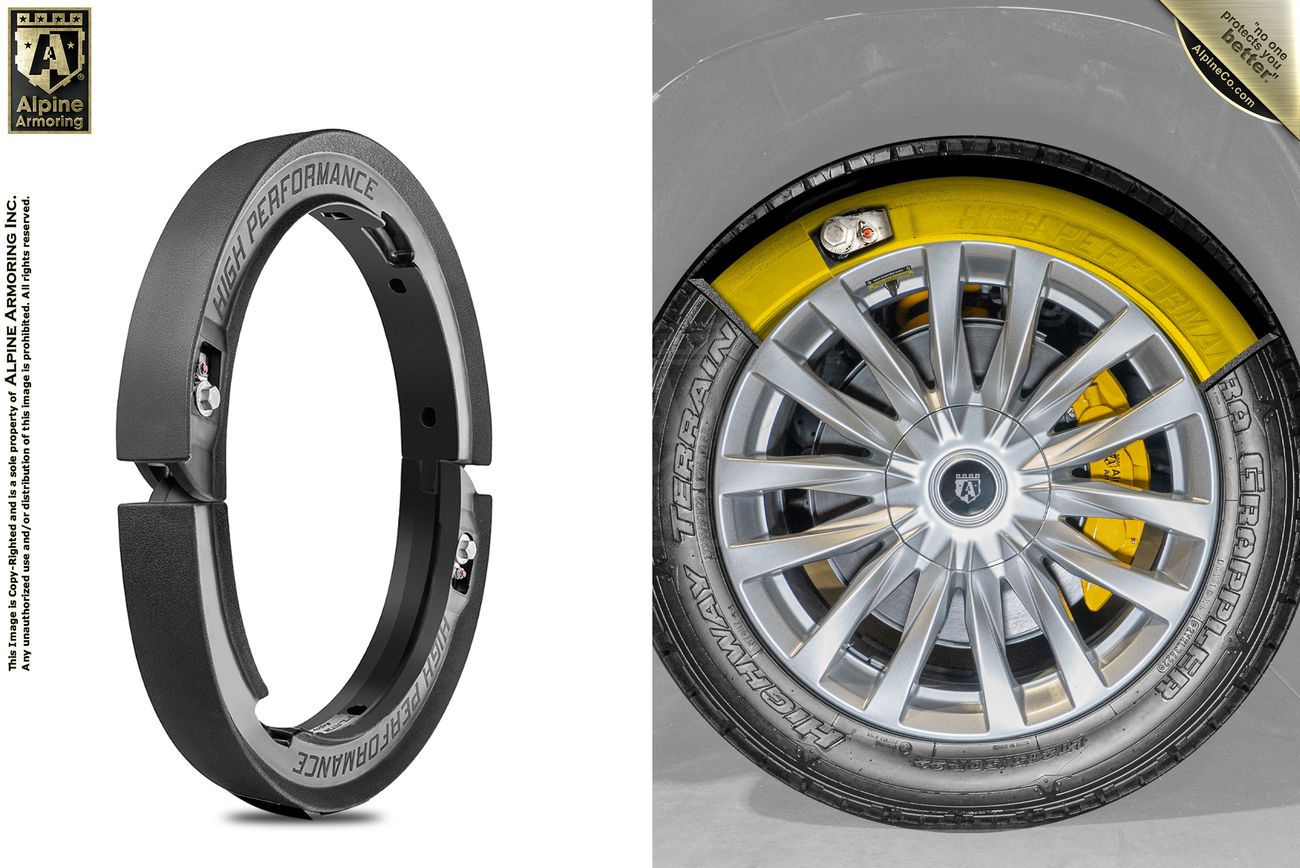
Inserts work within tires through innovative engineering, enabling driving even when the tires are sprayed with multiple bullets. In that case, the run flat insert acts as an actual tire and maintains driveability to a safety point, typically within 50 miles. After that, the accumulated kinetic energy will generate excessive heat, leading to the gradual deterioration of the composite polymer. These inserts typically feature an elastomer and metal construction with advanced locking mechanisms that prevent tire separation after a puncture, allowing uninterrupted movement in crisis scenarios.
Emergency Driving Performance
Run-flat tires maintain control and tire-puncture safety, reducing the risk of rim damage while ensuring the continued functionality of ABS, DSC, and CBC systems. Both factory run-flats and inserts prevent dangerous deflection and keep vehicles on the road during emergencies, allowing drivers to steer precisely when regular tires would collapse completely.
Crisis Mobility Range
Run-flat inserts and tires also provide about 50 miles at a maximum speed of 50 mph when driving with a flat tire, including when a tire is shot and entirely flat. Performance variations depend on vehicle load, temperature, and road surface. This range proves sufficient for reaching safe locations in most crisis scenarios, whether escaping dangerous areas or reaching repair facilities during critical situations.
Why Standard Tires Fail in Crisis Situations?
Regular tires in a crisis can often create vulnerabilities, leaving vehicles immobilized precisely when movement becomes mission-critical.
Instant Deflation Risks
Standard tire sidewalls collapse immediately upon air loss, resulting in a complete loss of vehicle control. Rim damage occurs rapidly when deflated tires contact road surfaces, potentially immobilizing the vehicle completely in critical escape situations.
Security and Tactical Vulnerabilities
In scenarios where stopping creates risks – such as safety threats, hazardous areas, or evacuations – tire failure becomes a critical vulnerability. Extended movement becomes essential when navigating through civil unrest or emergencies in which vehicle immobilization poses an immediate danger.
When Do Run-Flat Tires Prove Essential?
Numerous documented cases across civilian, security, and tactical applications demonstrate how run-flat technology prevents disasters by maintaining movement during critical tire failures.
Highway Emergency Situations
Highway tire failures pose immediate dangers due to high-speed traffic, construction zones with limited shoulders, and mountain passes where stopping isn't feasible. Run-flat tires maintain vehicle control during sudden pressure loss, enabling continued driving to safe exit points or service areas without exposing occupants to traffic dangers.
Urban Security Incidents
Dense traffic, nighttime driving in unfamiliar areas, and high-crime metropolitan areas create scenarios where tire failure significantly increases exposure risks. Run-flat inserts provide adequate protection against pothole damage, enabling the driver to reach assistance, and are particularly beneficial during civil unrest or security incidents.
Remote Area Emergencies
Harsh road conditions, combined with limited assistance such as desert highways, mountain roads, and rural routes with sparse cell service, can make tire failure life-threatening. Potholes are a major cause of tire puncture and sidewall bulge, leading to complete tire failure in these isolated areas.
Which Vehicles Need Run-Flat Protection?
There are numerous run-flat tire benefits for different vehicle types, based on their operational requirements, with various systems matching specific vehicle applications.
Luxury and Performance Vehicles
Extensive run-flat adoption spans the BMW 7 Series and Mercedes-Maybach, with professional-grade inserts utilized in sedans and low-profile high-performance vehicles to maintain factory specifications. Premium platforms, such as those from Rolls-Royce and Bentley, benefit from factory-integrated suspension tuning designed specifically for run-flat tires.
Family and Executive Transport
Cadillac Escalade, Chevrolet Suburban, and Range Rover applications demonstrate the broad benefits of family vehicles. Professional inserts in SUVs provide enhanced security for family transport and executive vehicle applications.
Vehicles Without Spare Tires
More than 50% of new cars lack spare tires, creating a significant gap that run-flat tires help fill. Automaker weight-reduction strategies and cargo-space priorities have eliminated the use of traditional spare tires, making run-flat technology crucial for maintaining basic automotive resilience during tire emergencies and for maintaining vehicle movement.
What Are Run-Flat Limitations?
Certain run-flat tire disadvantages require consideration, but the advantages of the insert system often effectively mitigate traditional limitations.
Repair and Replacement Challenges
Factory run-flat tire repair and patching are typically not possible due to the reinforcement, which makes damage assessment difficult. Inserts offer advantages when tire damage may only require tire replacement, allowing reuse of the insert if it remains in good condition and reducing overall replacement costs.
Ride Quality Trade-offs
Factory run-flat reinforced sidewalls create stiffer ride characteristics and increased road noise transmission compared to standard tires. Run-flat inserts help preserve the factory ride quality better than OEM run-flats, maintaining the original vehicle's comfort characteristics while adding crisis mobility capabilities.
Price and Availability Issues
Factory run-flat price is typically $13-$50 higher per tire than comparable standard tires, while inserts offer a significantly higher initial investment but can enable tire reuse and preserve factory specifications. Selection limitations and regional run-flat tire availability can pose challenges for scheduling flat tire replacements, particularly in specialized applications or remote locations.
How Much Do Run-Flat Tires Cost?
Run-flat pricing structures vary significantly between factory tires and inserts, with value considerations differing based on application requirements. Outfitting a vehicle with run-flat tires or inserts adds to the overall cost. With pricing varying significantly by vehicle model, wheel size, and specific system requirements, the upgrade costs range from $350 to over $1,500 per tire. Larger wheels and more advanced inserts typically command higher prices, while standard applications may be more affordable. These costs do represent a worthwhile investment to ensure your vehicle can still get you to safety even with damaged tires.
What are the Leading Run-Flat System Technologies?
Leading manufacturers provide crisis-focused technologies across both factory tire and insert system categories, each serving different operational requirements.
Factory Run-Flat Leaders
Leading tire manufacturers, such as Michelin®, offer Zero Pressure technology that delivers 50-mile/50-mph capability. Meanwhile, Continental's ContiProContact SSR tires are extensively used by BMW and other luxury automakers. Bridgestone’s DriveGuard technology also provides the 50/50 post-puncture extended movement, making it suitable for both civilian and security applications.
Professional Inserts
Professional inserts are designed for specialized applications in sedans and high-performance vehicles, featuring lightweight, flexible designs that prevent tire separation while maintaining factory specifications and ensuring driving quality after a blowout.
Can You Mix Run-Flats with Regular Tires?
Tire mixing involves specific restrictions and considerations that affect vehicle performance and capability.
Vehicle Handling Impacts
Mixing run-flat and standard tires affects steering, braking, and grip characteristics because of the different sidewall stiffnesses of the two tire types. Experts recommend complete set replacements for optimal vehicle dynamics, particularly important for armored vehicles, where handling precision is crucial for operational effectiveness.
Emergency Performance Compromises
Mixed tire configurations compromise overall capability and lead to unpredictable handling characteristics during critical situations. Maintaining consistent tire technology across all positions ensures predictable vehicle behavior when mobility becomes essential.
What Are the Run-Flat Maintenance Requirements?
Run-flat tire maintenance protocols ensure optimal performance when movement becomes necessary.
Tire Pressure Monitoring Systems
TPMS requirements for run-flat operation are critical for detecting air loss during operational conditions. System functionality during emergencies provides essential information for assessing remaining movement capability and planning routes to secure locations.
Regular Inspection Protocols
Inspection requirements include assessing sidewall damage, monitoring tread depth, and identifying age-related wear and tear that necessitate replacement. A visual inspection is insufficient to determine the condition of a run-flat tire; a professional evaluation is required to ensure continued crisis capability.
For vehicles requiring guaranteed crisis mobility, regular professional assessments ensure that tires remain capable of providing extended movement in the event of an emergency. Whether you need consultation on run-flat tires for your vehicle or want to explore automotive armoring options that include this critical technology, contact Alpine Armoring's specialists to discuss your requirements.
Frequently Asked Questions about Run-Flat Tires and Inserts
Run-flat tires are self-supporting, with reinforced sidewalls that maintain vehicle support in the event of a loss of air pressure, allowing emergency driving.
You can drive up to 50 miles at a maximum speed of 50 mph, with variations depending on vehicle load, temperature, and road conditions.
Run-flat systems ensure vehicle stability and operation during tire punctures, preventing loss of control.
Reinforced sidewalls resist damage and provide continued mobility even with sidewall tears that would immediately incapacitate standard tires.
Alpine Armoring offers run-flat inserts, both standard and composite systems, for almost every vehicle in our armoring catalogue.
The value includes enhanced security, elimination of roadside changes, space savings, and crisis mobility benefits that often justify higher purchase prices.
Run-flat inserts eliminate the necessity of a spare tire while providing superior emergency mobility compared to temporary spare tires.
Most punctured run-flats require complete replacement due to repair limitations and manufacturer policies designed to maintain structural integrity.
TPMS warning systems alert drivers to pressure loss, as run-flat tires may show no obvious visual signs of air loss during emergency driving.
Vehicle compatibility requires proper suspension considerations, with run-flat inserts working best on vehicles initially equipped for them or professionally modified systems.
Run-flat inserts provide structural support during air loss, while self-sealing tires prevent punctures but cannot support vehicle weight without air pressure.
Run-flat inserts maintain performance in wet, dry, and winter conditions while preserving crisis capability across a wide range of temperatures.